














Free worldwide shipping
Free returns
Carbon neutral
Secure payments
| Product Benefits | Nasal Relief |
|---|---|
| Specific Uses For Product | Nasal Congestion |
| Active Ingredients | Oxymetazoline Hydrochloride |
| Item Form | Spray |
| Age Range Description | All |
| Target Use Body Part | Nose |
| Container Type | Bottle |
| Flavor | Original |
| Package Type Name | Box |
| Model Number | 070030139957 |
| Dosage Form | Spray |
| Model Name | Goodsense Maximum Strength Nasal And Congestion |
| Global Trade Identification Number | 00070030139957 |
| Manufacturer | PERRIGO COMPANY |
| UPC | 070030139957 |
| Manufacturer Part Number | LP13995 |
| Item Weight | 1.76 ounces |
| Item Dimensions | 2.13 x 1.31 x 4.88 inches |
| Number of Items | 1 |
| Unit Count | 1 Fluid Ounces |
| Net Content Weight | 2.4 pounds |
| Additional Features | Fast-Acting |
| Material Type Free | en_AE |
| Product Benefit | Nasal Relief |



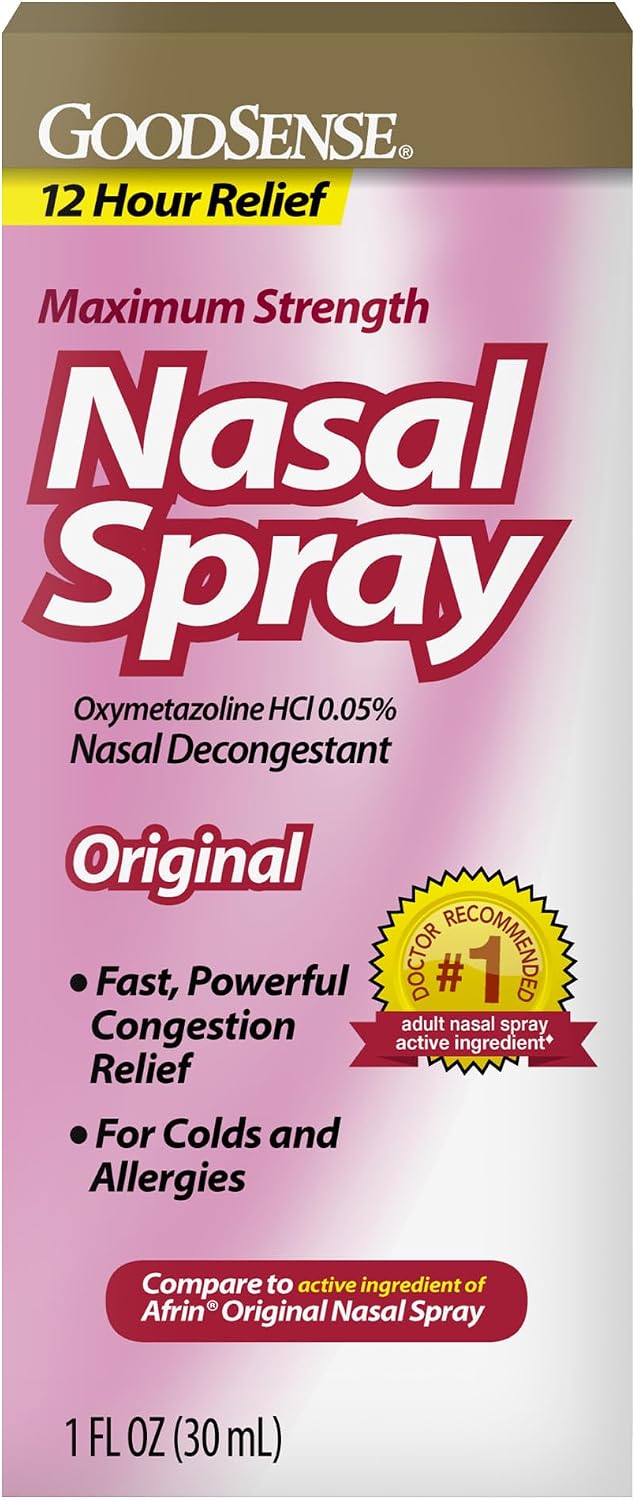
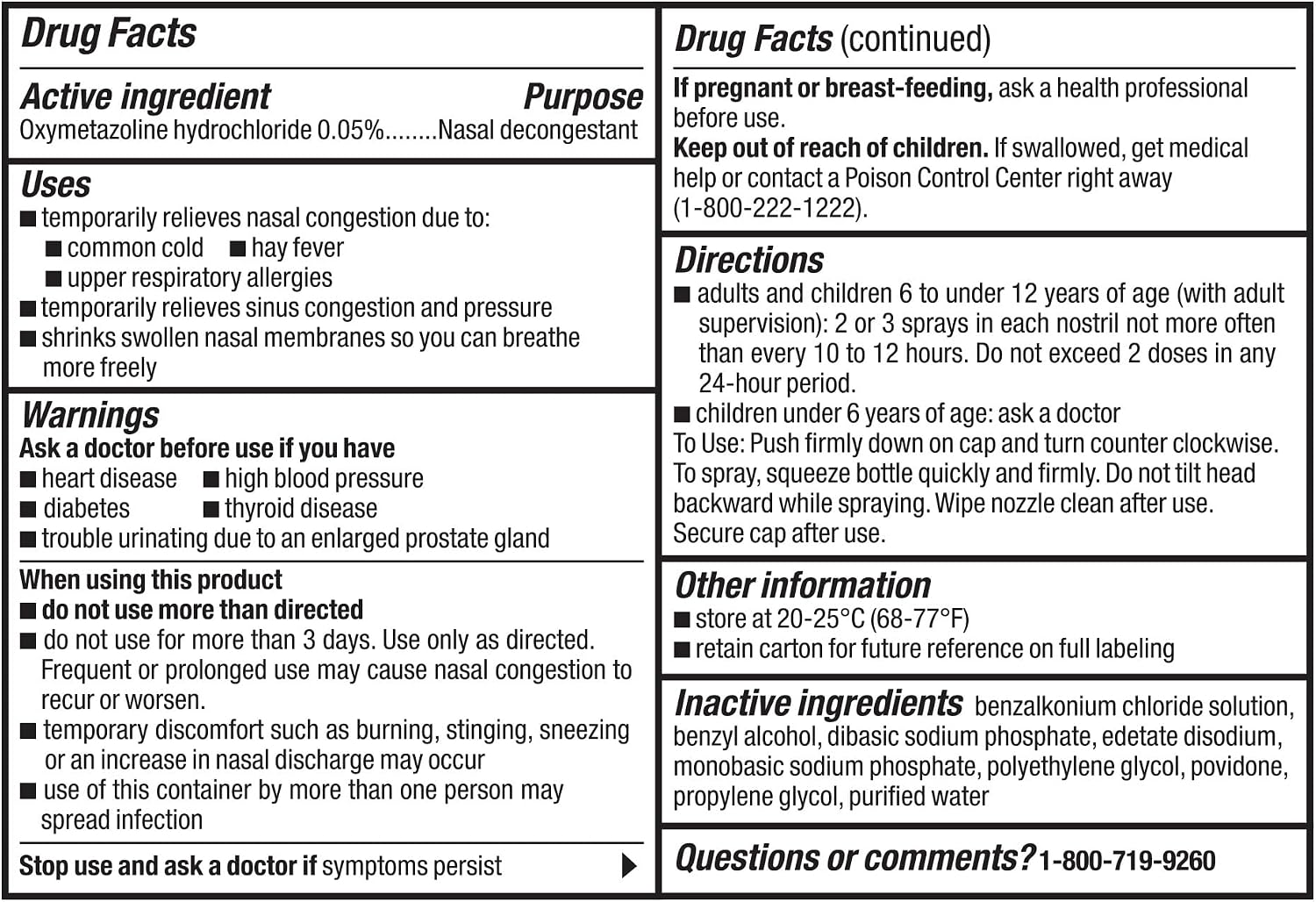
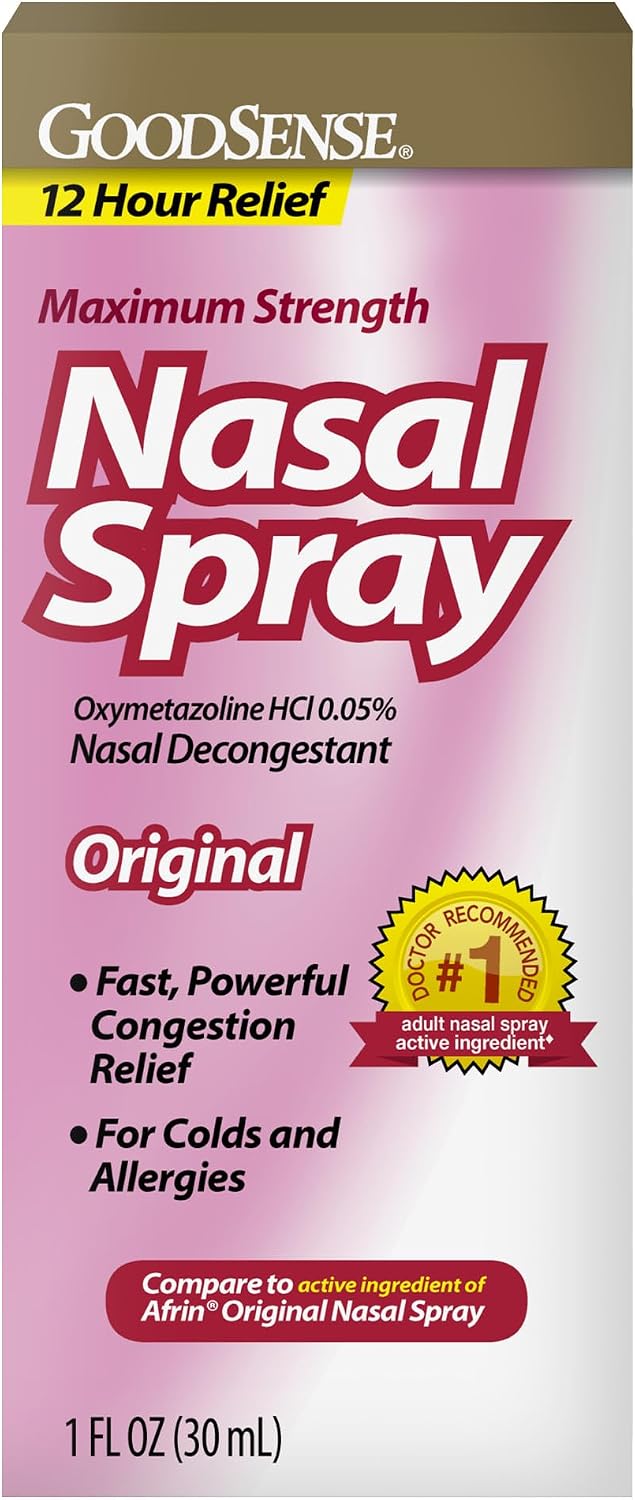
Nasal Spray Oxymetazoline HCl 0.05% maximum strength, provides fast, powerful congestion relief for allergies and colds for up to 12 hours. The active ingredient is oxymetazoline hydrochloride 0.05%, nasal decongestant, soothes as it relieves and clears stuffy noses fast. This original nasal spray mist temporarily relieves nasal congestion and sinus congestion and pressure due to common cold, hay fever, and upper respiratory allergies.

Every year, adults have an average of 2 to 3 colds, and children have even more. There are over 200 viruses that can cause the common cold, but rhinovirus is the most common. When germs that cause colds first infect the nose and sinuses (air-filled pockets in the face), the nose makes clear mucus. This helps wash the germs from the nose and sinuses. After two or three days, mucus may change to a white, yellow, or green color. This is normal and does not mean you or your child needs antibiotics. Other signs and symptoms of the common cold can include sneezing, stuffy nose, sore throat, coughing, post-nasal drip (mucus dripping down your throat), watery eyes, mild headache, and mild body aches. These symptoms usually peak within 2-3 days but can last for up to 10-14 days.1

Most experts believe that cold viruses are spread by respiratory droplets propelled when people with cold cough, sneeze or talk. These droplets can land in the mouths or noses of people 3 to 6 feet away. Less often, a person might get a cold by touching a surface or object that has the virus on it and then touching their mouth or nose.2

For the first 2 to 3 days of a cold, the person who is sick is most contagious, or able to spread the cold virus to others. After the first week, most people are often no longer contagious. Usually it takes 2 to 3 days after coming into contact with a cold virus for a person to develop symptoms; however, it could occasionally take up to a week for symptoms to appear.3

1 Centers for Disease Control and Prevention, U.S. Department of Health and Human Services, 'Common Cold and Runny Nose', Reviewed March 16, 2016. Accessed April 6, 2016
2 Centers for Disease Control and Prevention, U.S. Department of Health and Human Services, 'Common Colds: Protect Yourself and Others', Reviewed Feb. 8, 2016. Accessed April 6, 2016
3 U.S. Department of Health and Human Services, National Institutes of Health, MedlinePlus, 'Common Cold', Accessed April 11, 2016.
loading