






Free worldwide shipping
Free returns
Carbon neutral
Secure payments
| UPC | 649910801293 |
|---|---|
| Model Name | Glucose Test |
| Unit Count | 50 Count |
| Manufacturer | Bartovation |
| Model Number | PSS05B50 |
| Product Grade | new |
| Number of Items | 50 |
| Special Feature | Easy to Use |
| Number Of Pieces | 50 |
| Number of Pieces | 50 |
| Additional Features | Easy to Use |
| Included Components | Bag of Test Strips |
| Manufacturer Part Number | PSS05B50 |
| Specific Uses For Product | Scientific Glucose Test Strips for Food Science or Osmosis/Diffusion Experiments |
| Global Trade Identification Number | 00649910801293 |

From our headquarters in Queens, New York and with the help of our distributor network, we service customers all around the globe. We specialize in the production and distribution of testing strips for virtually every application. We value every one of our customers and strive to make them happy and satisfied.
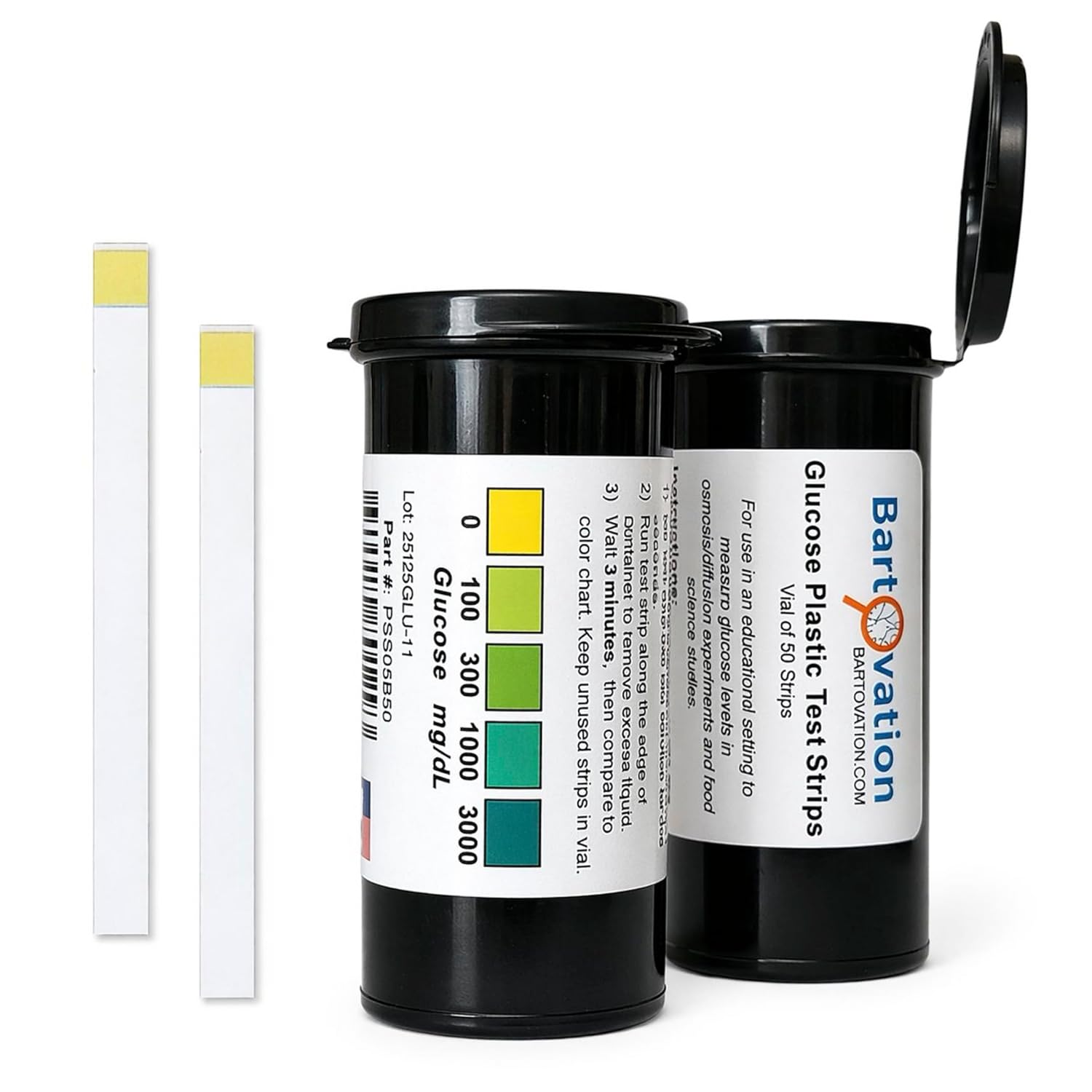
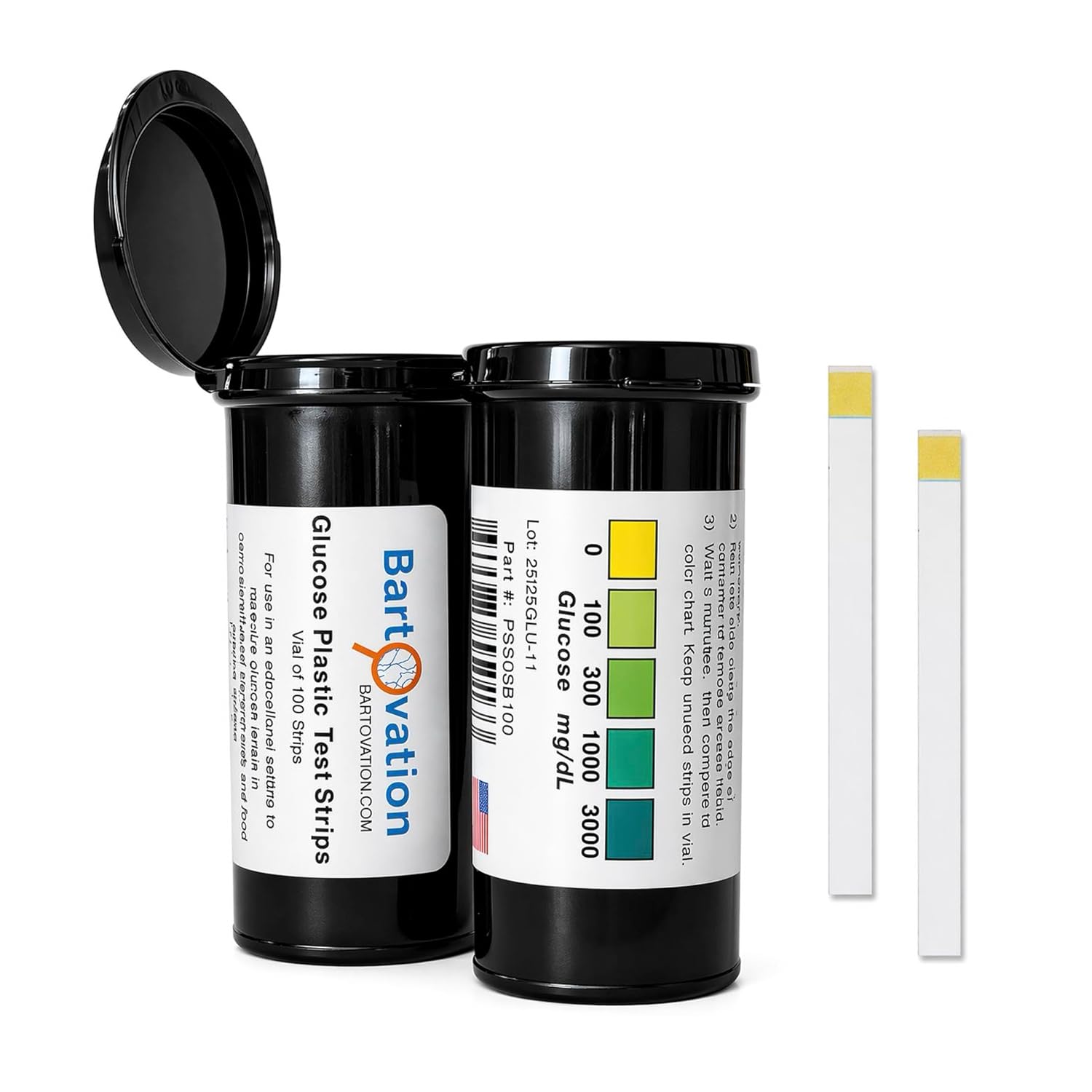
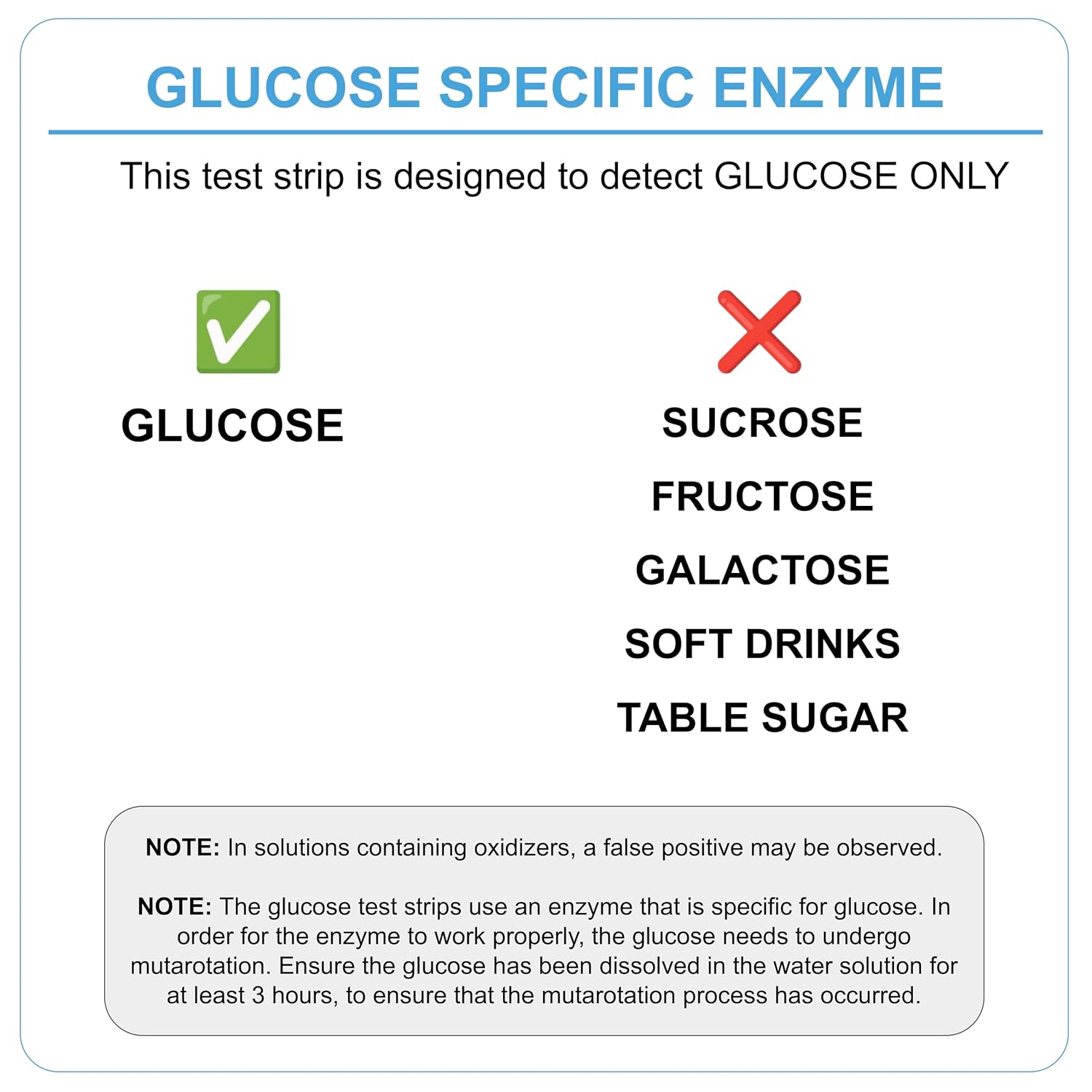
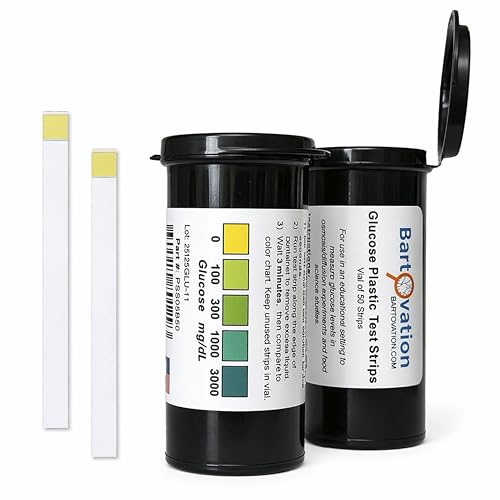
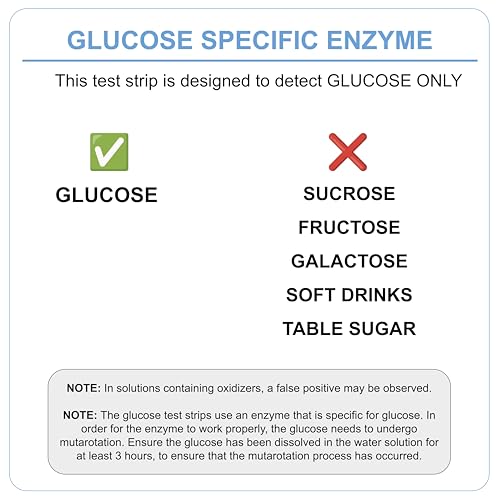
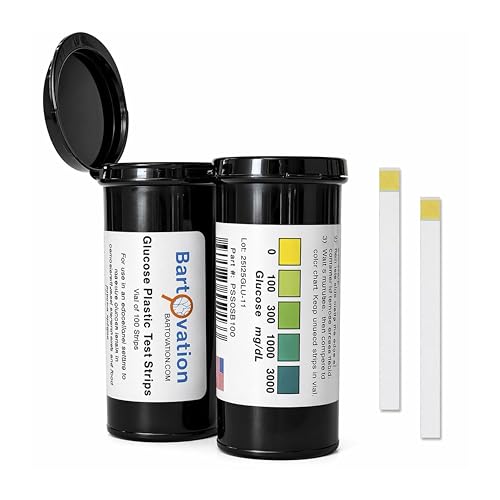
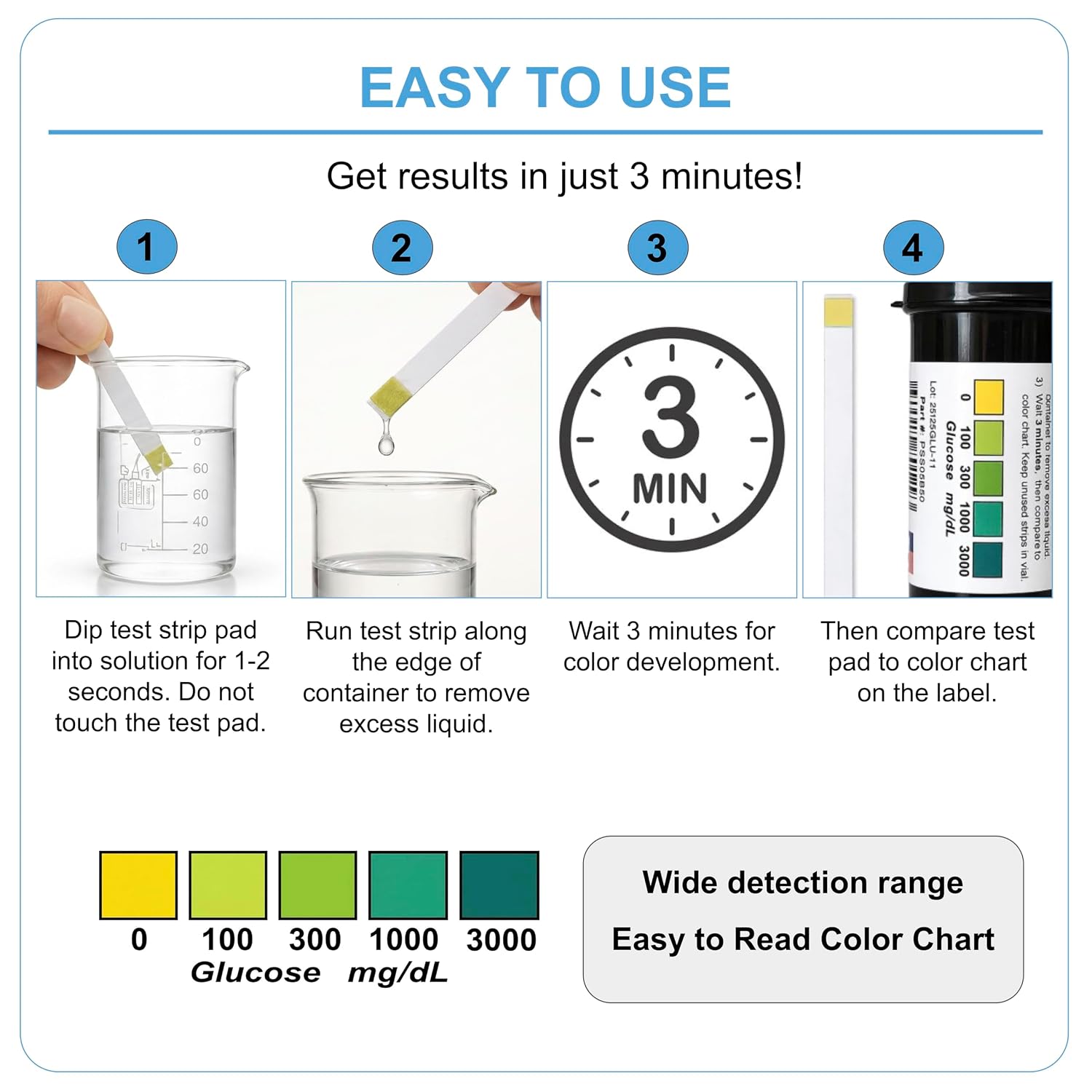
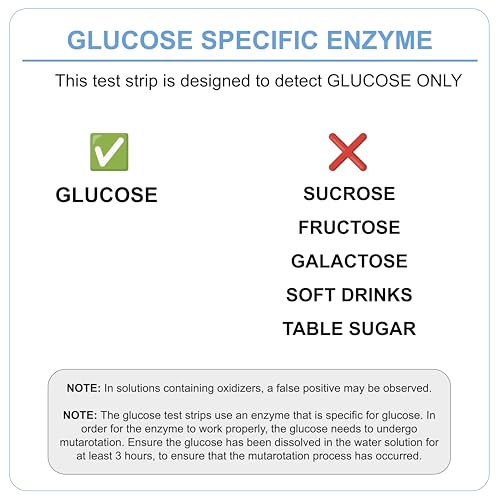
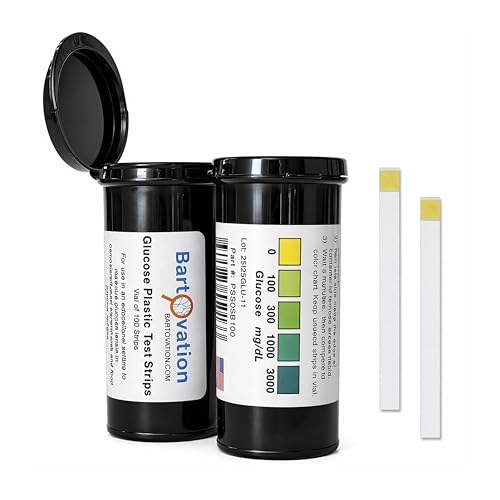
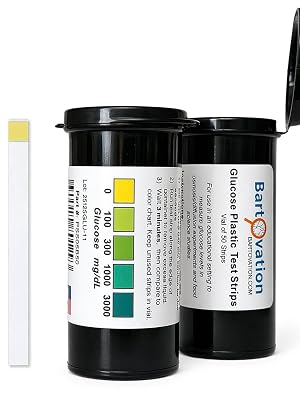
The Glucose test paper detects 0-3000 mg/dL glucose. The strip can be used to measure glucose levels in osmosis/diffusion experiments and food science studies. These strips are specific to glucose. You will not get a reaction with soft drinks or regular sugar since these are mainly fructose or sucrose. The strips are sensitive enough to detect the glucose from the breakdown of starch.
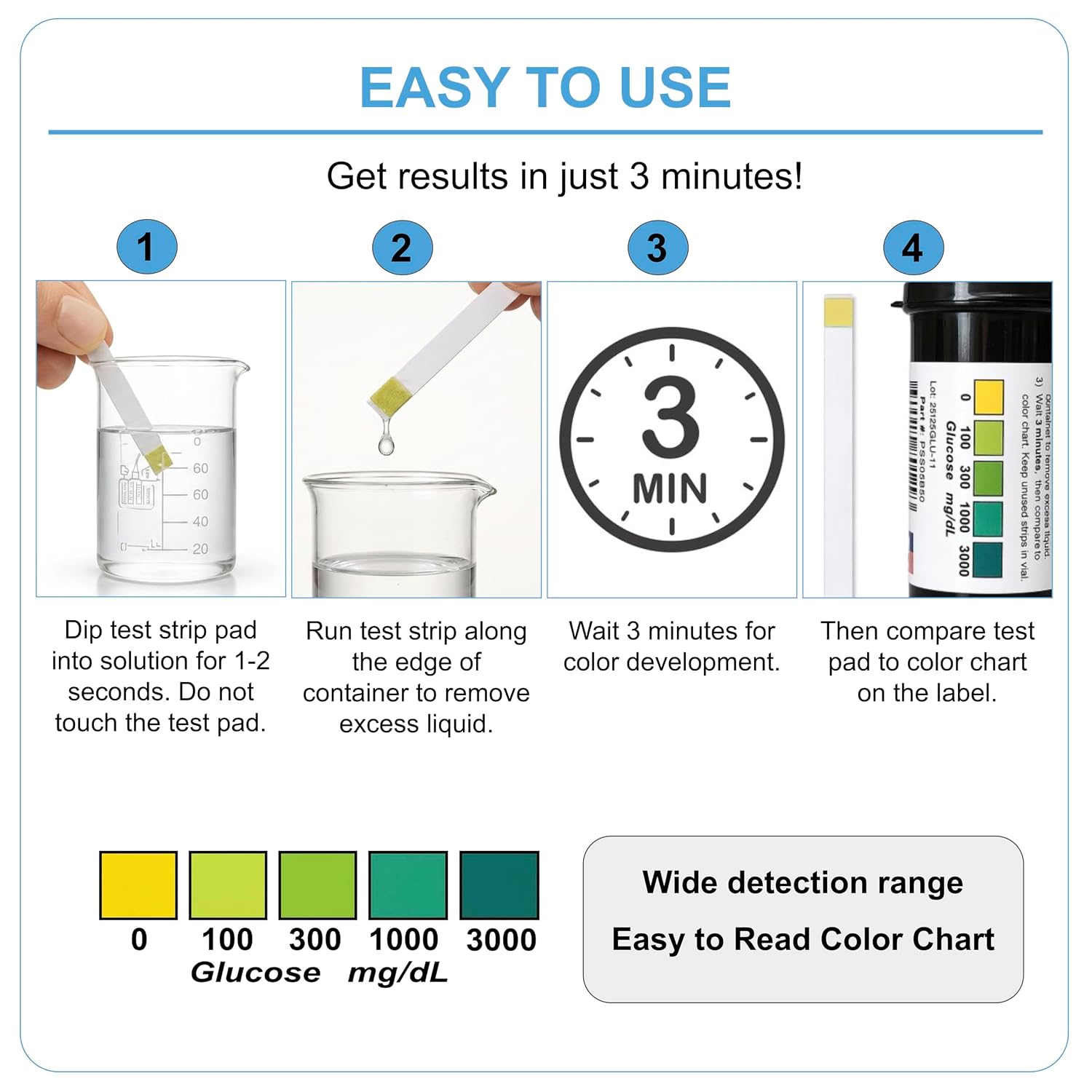
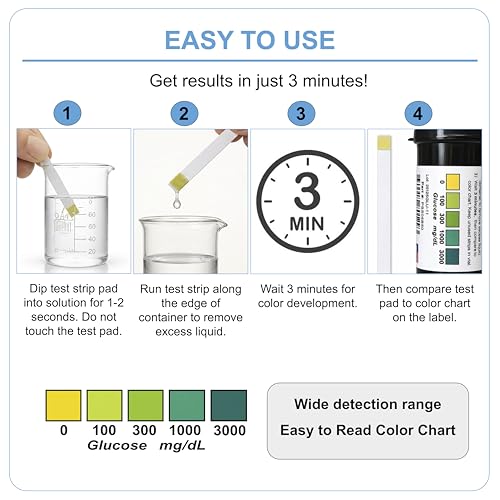
Instructions:
Reseal the vial as soon as possible. Do not touch the test pad with your fingers, as the oils on your fingers may produce an interference with your test results. NOTE: In solutions containing oxidizers, a false positive may be observed. NOTE: The glucose test strips use an enzyme that is specific for glucose. In order for the enzyme to work properly, the glucose needs to undergo mutarotation. Ensure the glucose has been dissolved in the water solution for at least 3 hours, to ensure that the mutarotation process has occurred.
| Intended Use | Osmosis/diffusion experiments or food science studies |
| Color Chart Increments | 0, 100, 300, 1000, 3000 mg/dl glucose |
| Result Format | Visual semi-quantitative color comparison against printed reference chart on vial |
| Test Time | 3 minutes |
| Storage Requirement | Store in a cool, dry place, out of direct sunlight |
| Strip Dimensions | 2.5" (L) x .1875" (W) [64mm (L) x 5mm (W)] |
| Number of Strips | 50 |
| NO | Calibration, laboratory, electronic meter, or drop counting required! |
| Made in | USA |
| Not Compatible With | You will not get a reaction with soft drinks or regular table sugar since these are composed mainly of fructose, galactose, or sucrose. |
loading